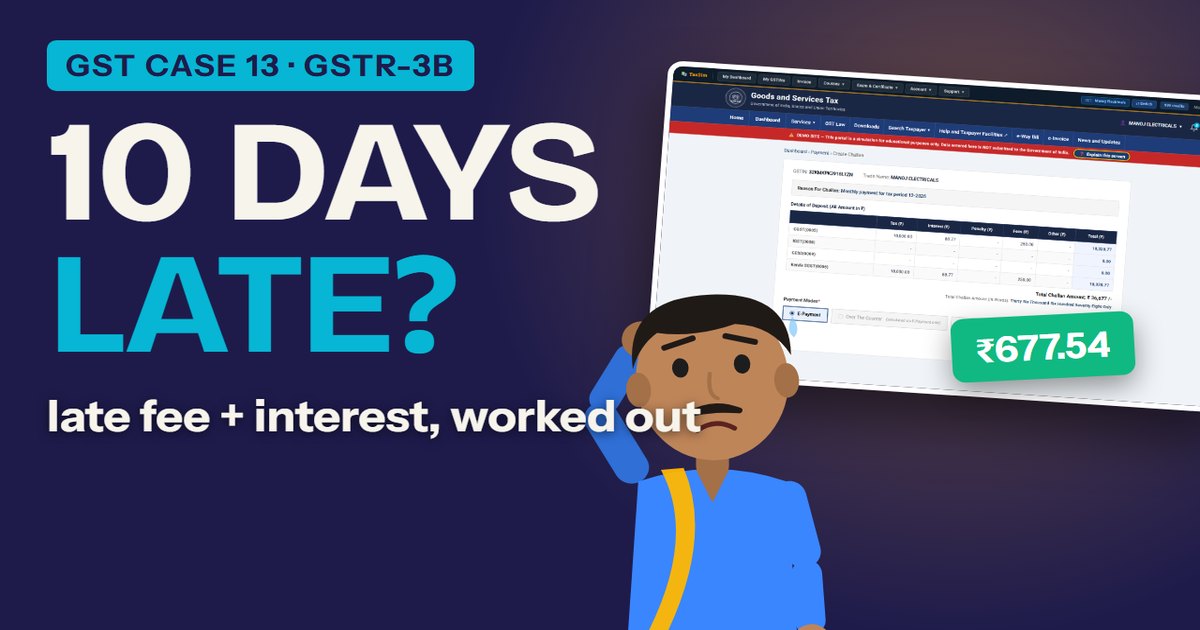
Short answer: the late fee is ₹25 CGST + ₹25 SGST a day, or ₹10 + ₹10 for a nil return, up to a cap. Interest under Section 50 is 18% a year on the net tax paid in cash. Input tax credit cannot pay either of them.
Maximum late fee, per head
| Last year's turnover | CGST (same again for SGST) |
|---|---|
| Nil return | ₹250 |
| Up to ₹1.5 crore | ₹1,000 |
| Up to ₹5 crore | ₹2,500 |
| Above ₹5 crore | ₹5,000 |
Example: ₹36,000 tax, 10 days late
December GSTR-3B was due on 20 January and is filed on 30 January. Tax is ₹18,000 CGST + ₹18,000 SGST, all paid in cash.
- Late fee: 10 × ₹25 = ₹250 under each head, ₹500 in all.
- Interest: ₹18,000 × 18% × 10 ÷ 365 = ₹88.77 under each head, ₹177.54 in all.
- Extra cost: ₹677.54. Total paid: ₹36,677.54.
Why you should not wait
The cost rises daily. Missing two months of returns can block e-way bill generation under Rule 138E. A GSTR-3B also cannot be filed after three years from its due date.
Practise it before you need it
You can try a late GSTR-3B filing on IndIaTaxSim, an educational GST simulator. Nothing you enter goes to the real portal, and all the data is demo data. Your first practice GST registration is free, and course Modules 1, 2 and 10 are free to watch.
This page is general education, not tax or legal advice for your own case. For real filings, use the official GST portals.
📚 Continue Learning
📖 You Might Also Like
IndIaTaxSim Team
GST compliance experts building India's most complete GST simulation platform. All articles are reviewed for accuracy against the latest GSTN portal updates.